
Reactive Python
Keep data, computation, and controls in one notebook.
Turn reactive Python into reports, apps, and presentations. Work with a coding agent, and keep every view connected to your analysis.


Keep data, computation, and controls in one notebook.

Give a report, an explorer, or a lesson its own layout and interactions.

Ask for a view. Your agent can inspect the notebook, edit the source, and verify the result.

Serve a live Python app, run Python in the browser, or publish prepared results.
Teach the same optimization problem as a lecture, a reading page, or a hands-on lab. Each view reads from the same Python notebook.
Each example notebook backs several views: slide decks, reading pages, linked explorers, maps, monitors, and printable reports. Open a view to compare it with its siblings and the notebook behind them.
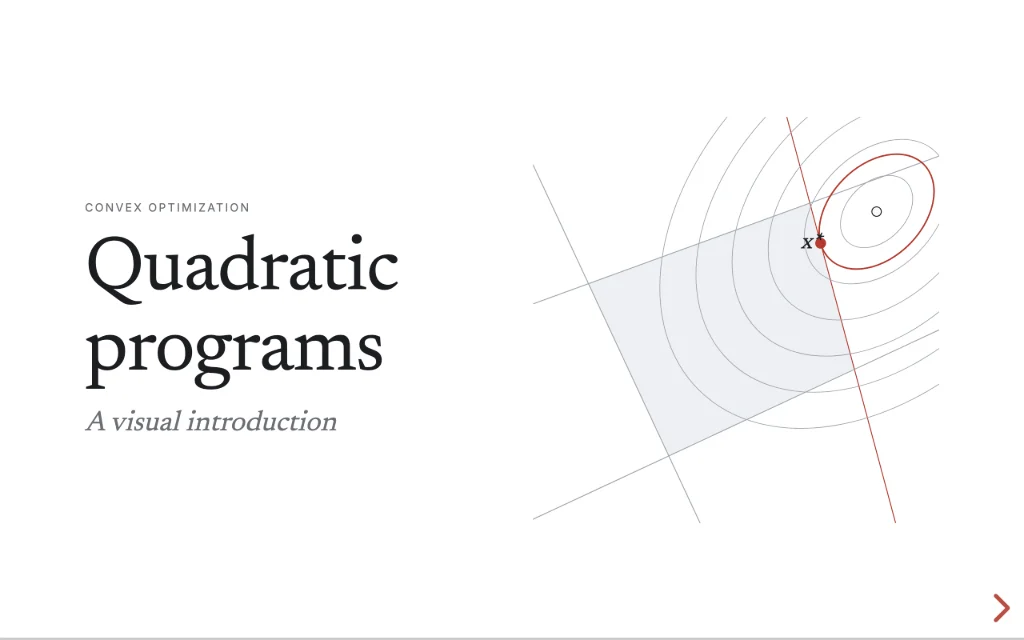 LectureQuadratic programsReact · Reveal.js
 OverviewRio 2016 athletesPlain HTML
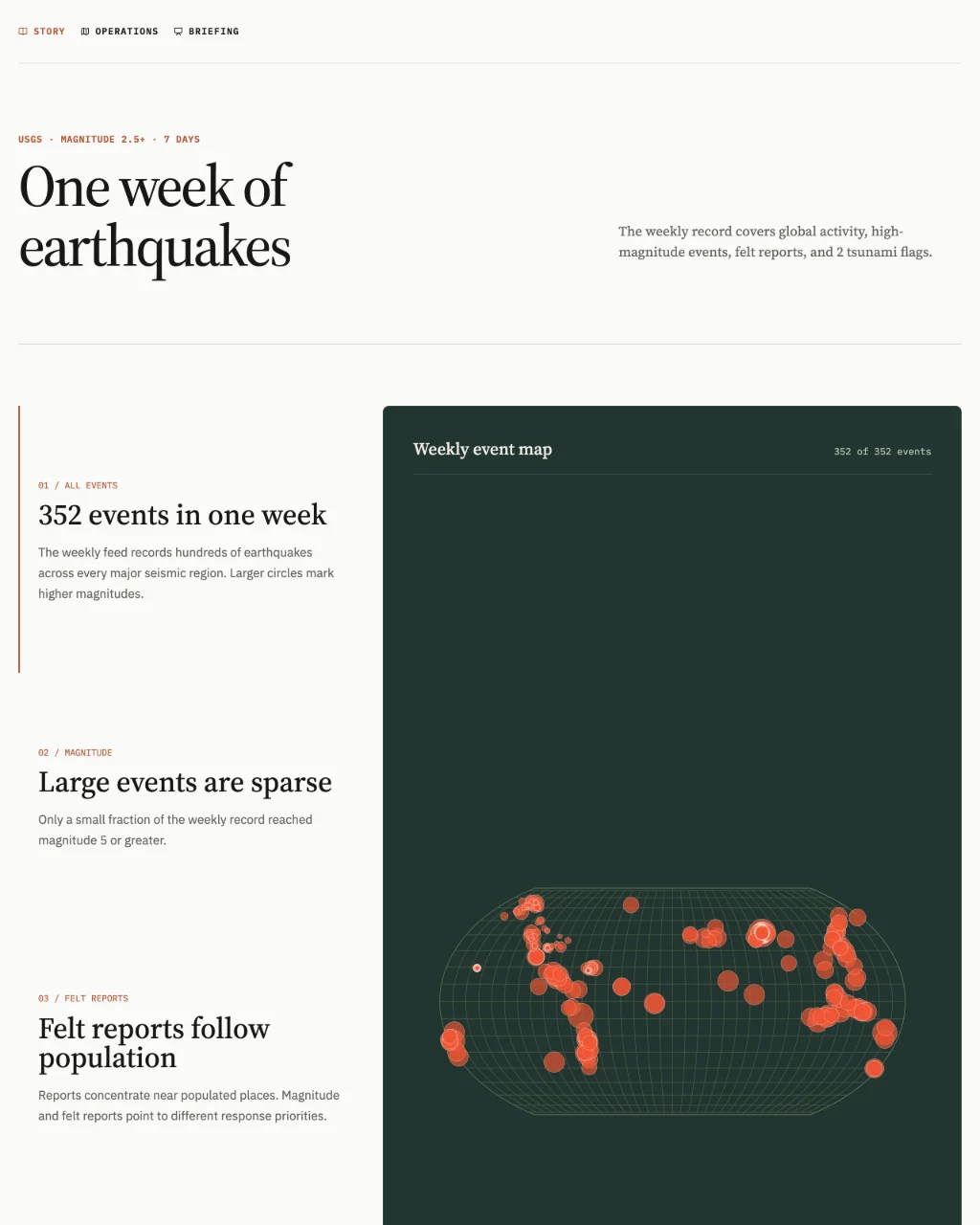 StoryEarthquake watchPlain HTML · Observable Plot
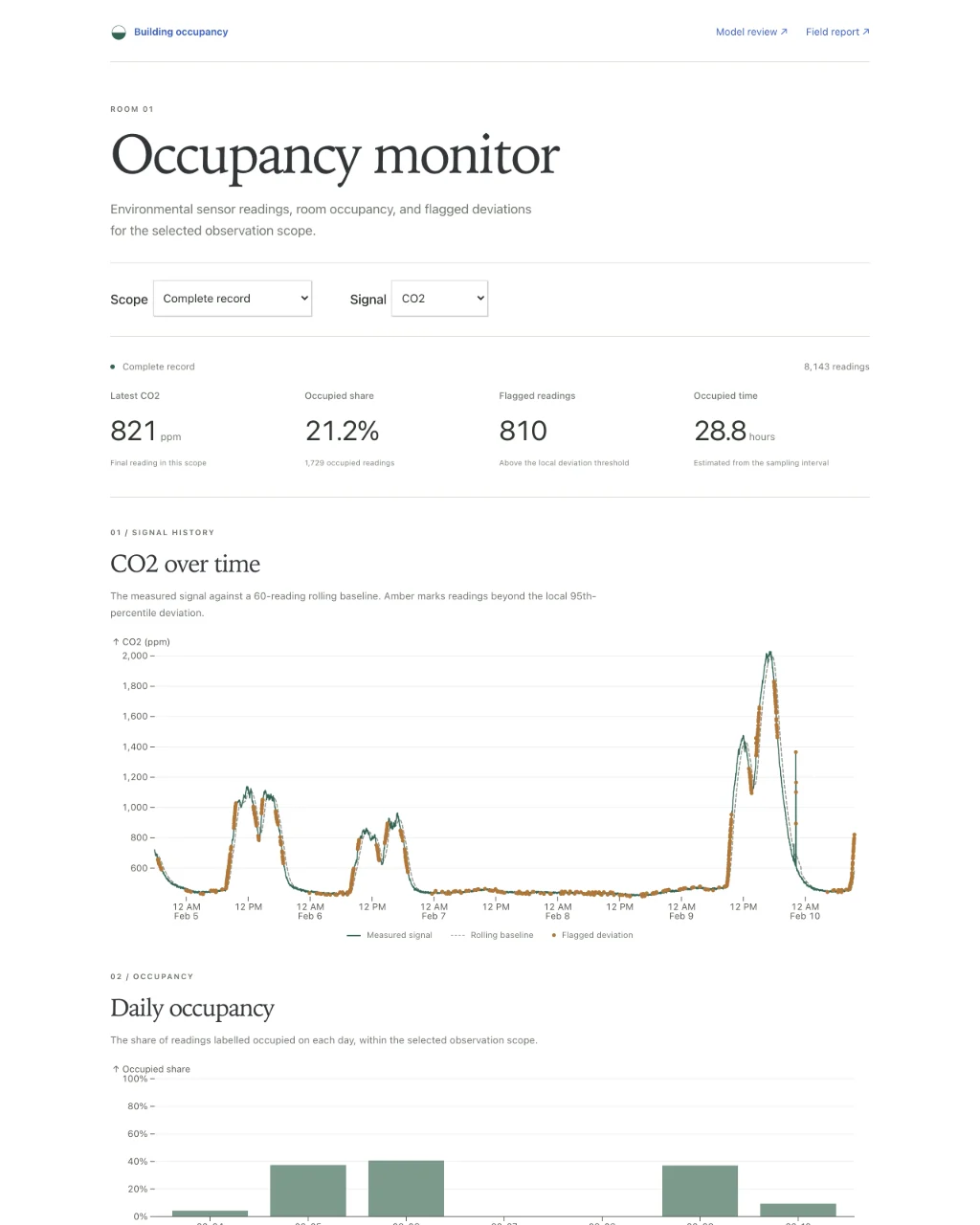 MonitorBuilding occupancyNotebook Kit · Observable Plot
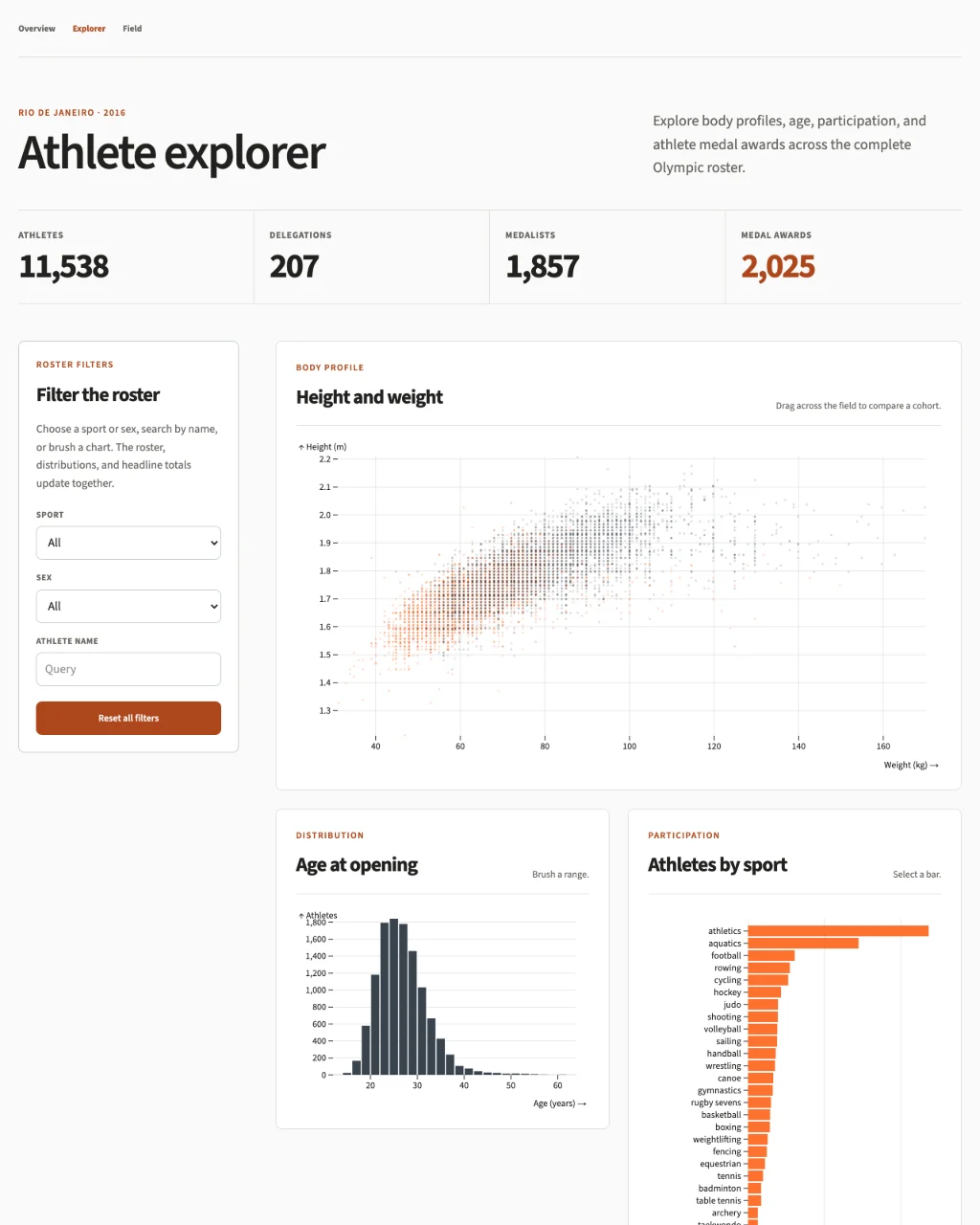 ExplorerRio 2016 athletesSvelte · Mosaic
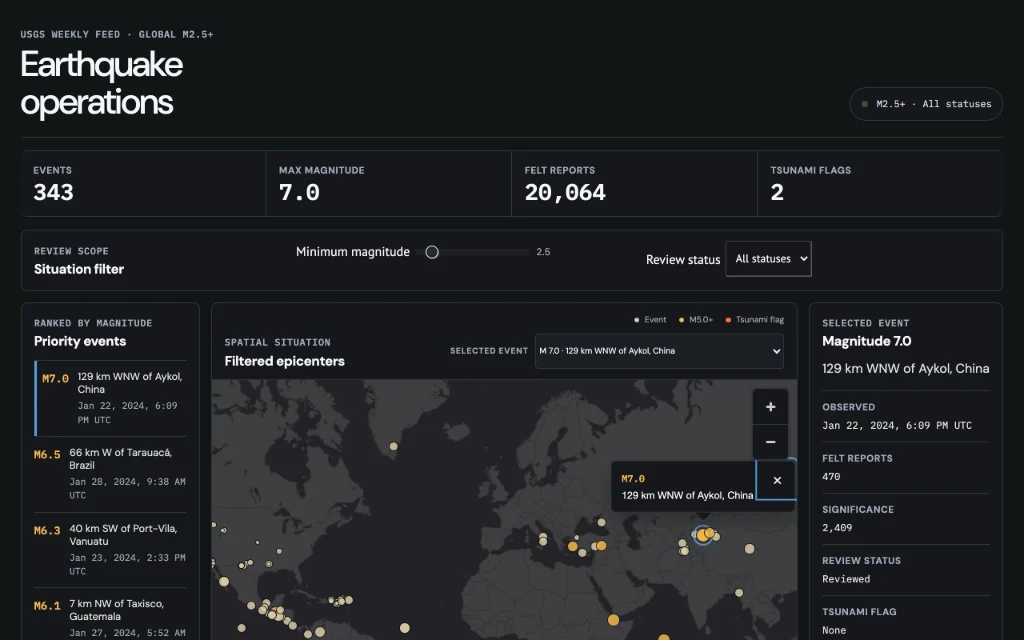 OperationsEarthquake watchReact · MapLibre
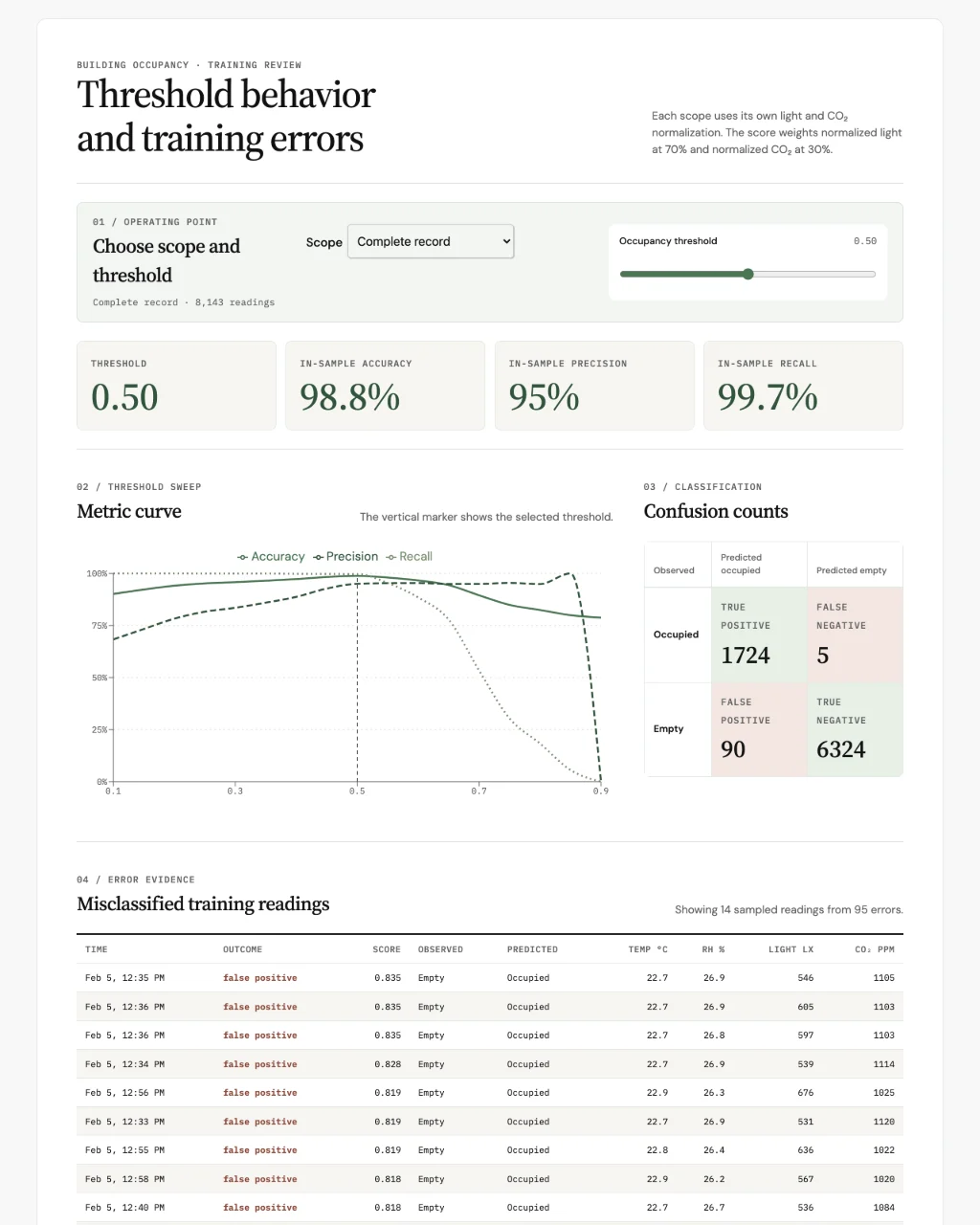 Model reviewBuilding occupancyReact · Recharts
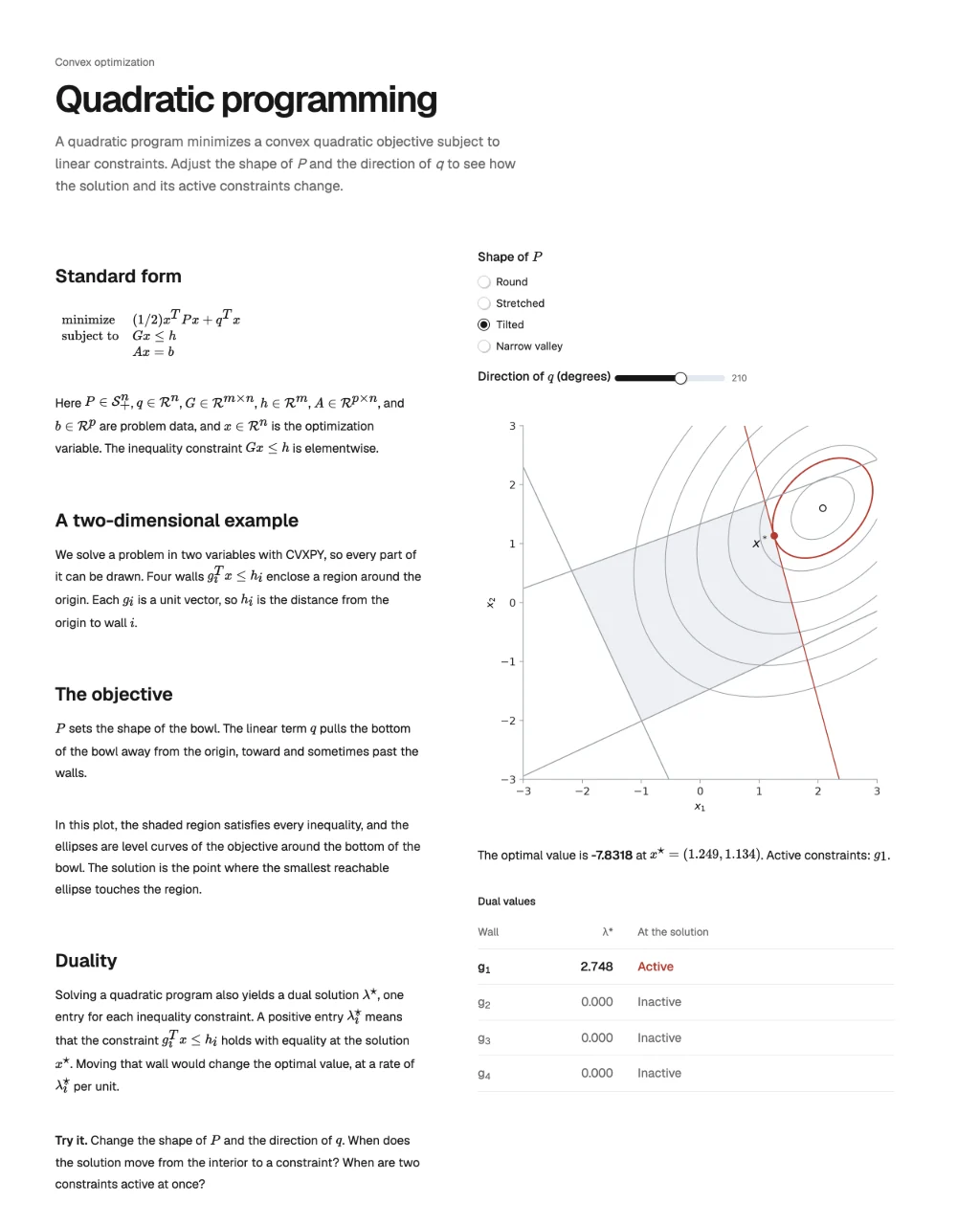 ExplainerQuadratic programsPlain HTML
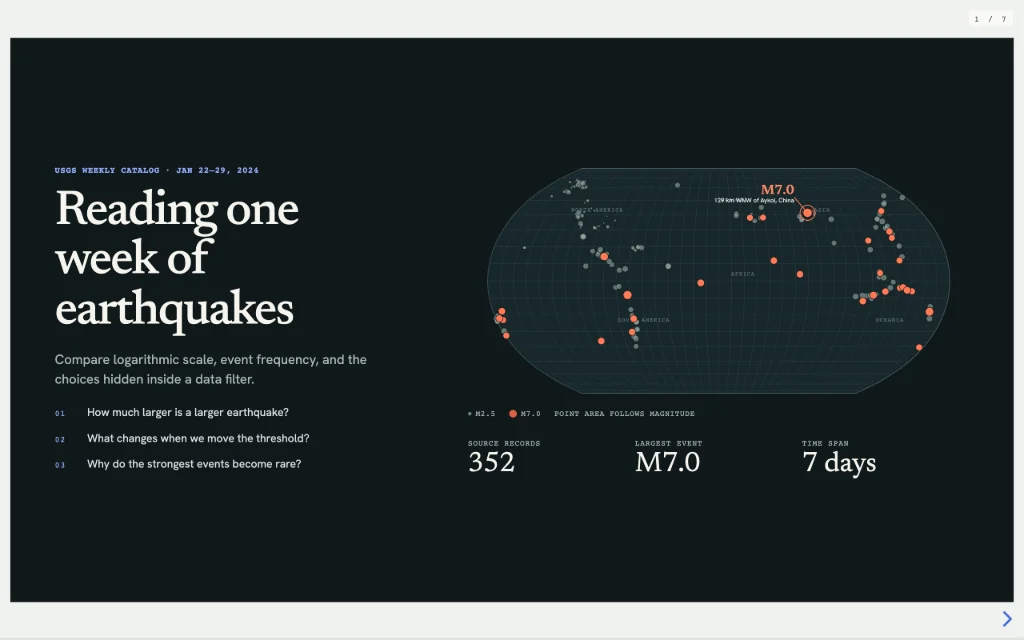 BriefingEarthquake watchReact · Reveal.js · D3
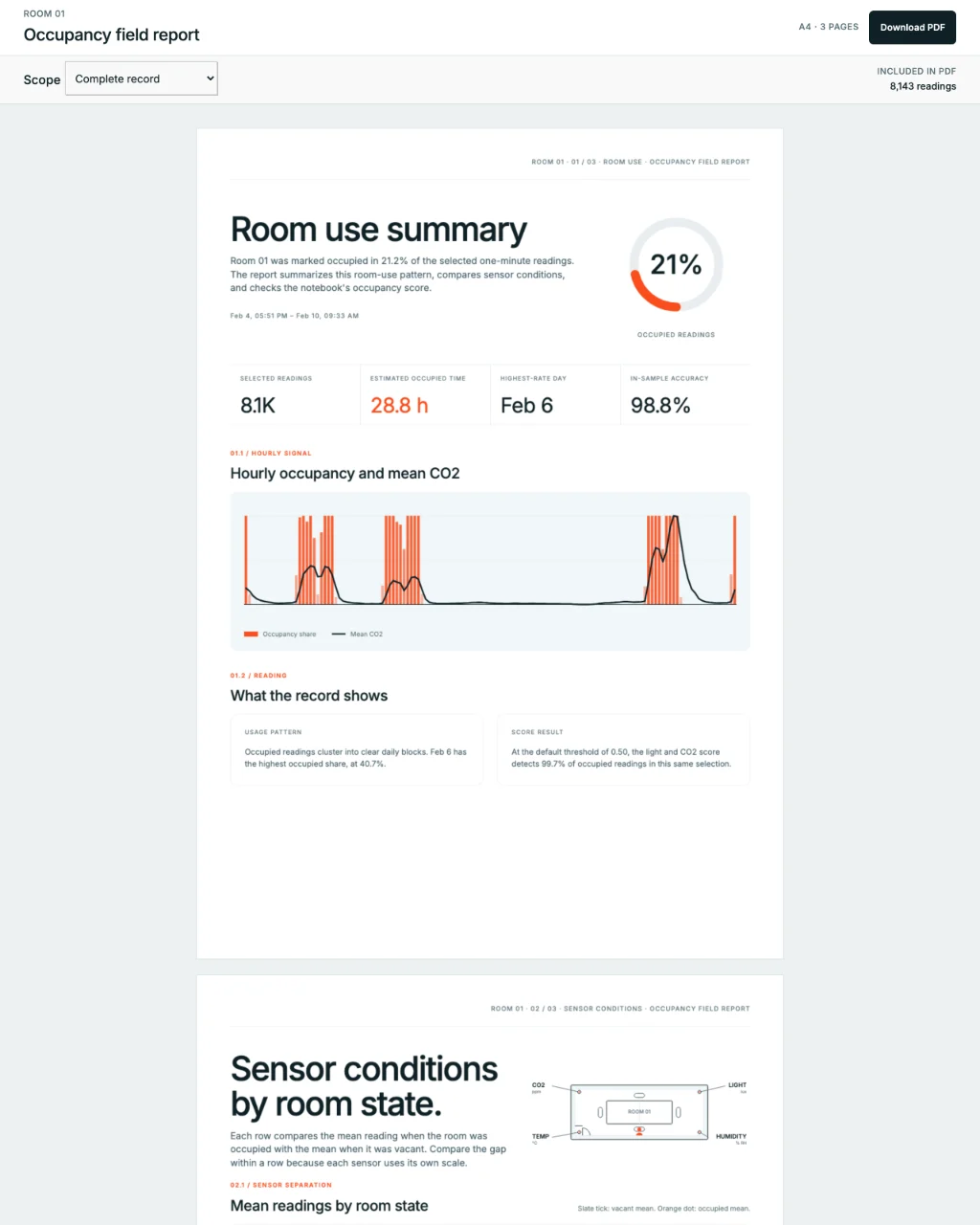 PDF reportBuilding occupancyReact · React PDF
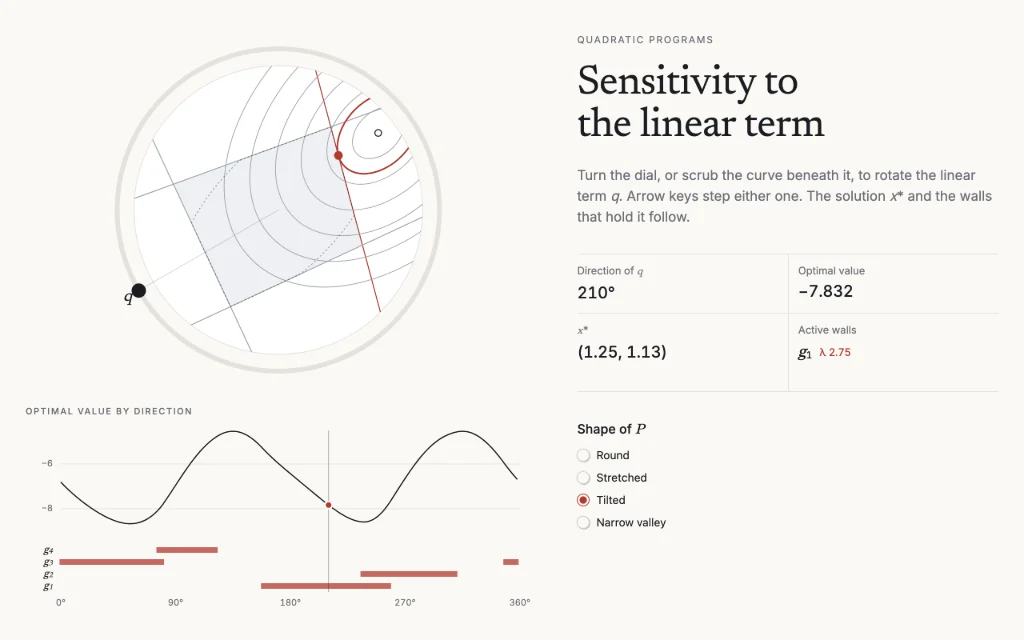 LabQuadratic programsSvelte · D3
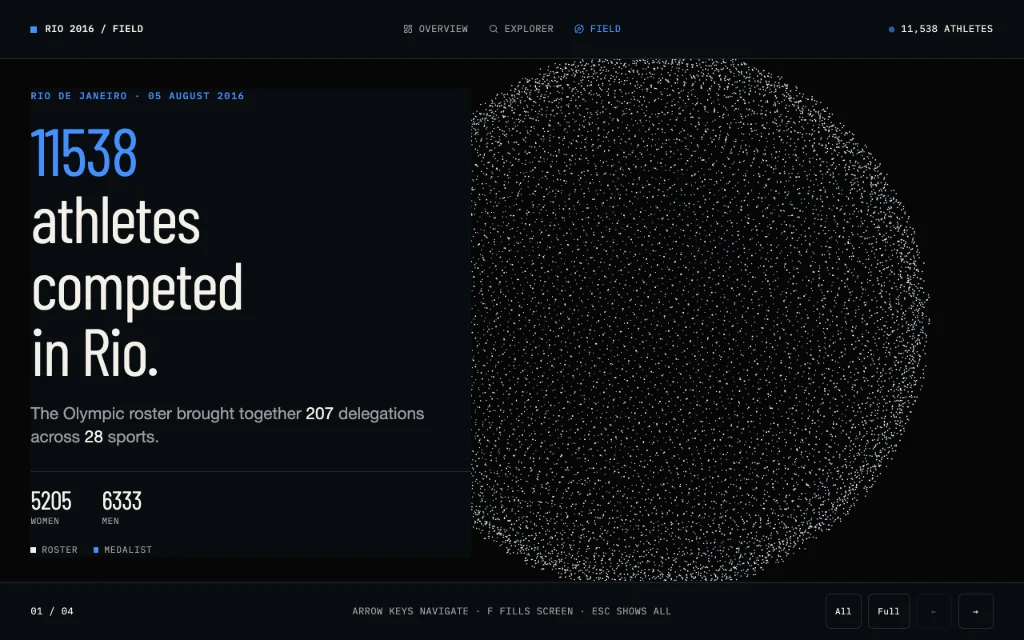 FieldRio 2016 athletesPlain HTML · Shower · Three.js
Browse the examples or run one locally.
Paste one request into a terminal agent such as Claude Code or Codex:
Run `uvx --with marimo-studio agent-plugins read marimo-studio` and create
a scrollytelling report and a slide deck explaining calculus basics.
The instructions ship with the marimo-studio package. They tell the agent to start a notebook with Studio, write its cells, then create, build, and show each view beside the notebook.
Author with a coding agent or follow Getting started by hand.